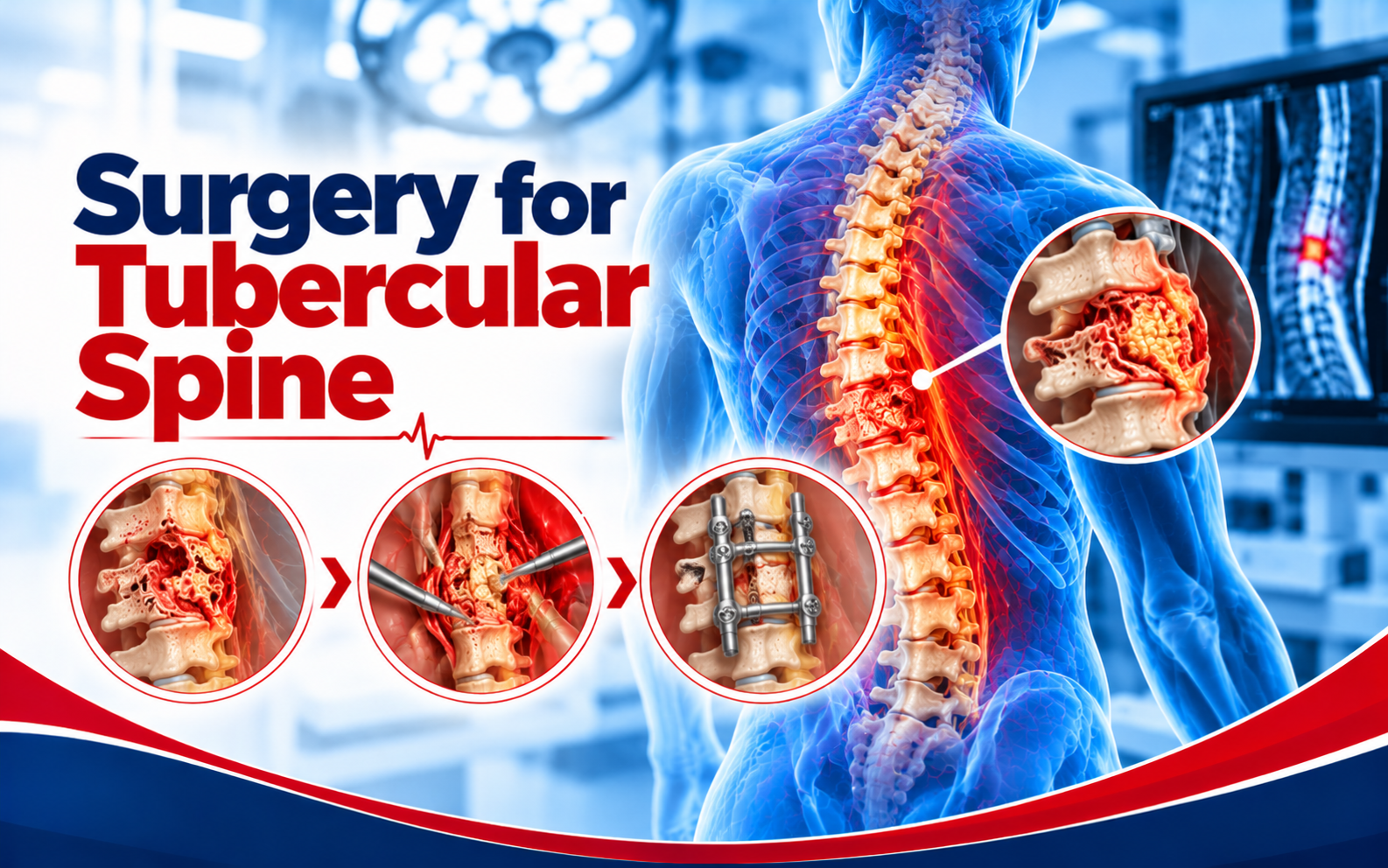
Spinal tuberculosis evaluation and indications for surgical management.
Understanding Surgery for Tubercular Spine and the reasons for specialist review
Spinal tuberculosis (Pott disease) is an infection of the spine that can affect the vertebrae and, in some cases, put pressure on the spinal cord or cause deformity. The correct first step is to understand the diagnosis rather than to select an operation from a website. Different people can have similar symptoms but different scan findings, and even the same scan result can mean different things depending on a person’s examination and clinical history. A careful discussion brings symptoms, physical findings, images and individual priorities together before treatment is recommended.
For someone looking into surgery for tubercular spine in Noida, it helps to know that this page explains the general medical decision-making process; it does not establish that any specific procedure will be available or appropriate. The reason for a consultation may be a new finding on imaging, ongoing symptoms, changing function, or the need to understand a recommendation already given elsewhere. Each of these starting points calls for a different conversation.
Symptoms and situations that deserve attention
People with persistent back pain, fever, weight loss, a diagnosed spinal infection or emerging neurological symptoms need specialist assessment. Symptoms in this area may include persistent neck or back pain, radiating arm or leg symptoms, altered sensation, weakness or a change in walking ability. Their meaning depends on the pattern, onset, severity and associated findings. For example, a sudden change may have a very different urgency from a symptom that has been stable for months. It is useful to note the first day something changed and whether it is improving, fluctuating or steadily worsening.
Difficulty with walking, working, sleep, hand use or day-to-day self-care helps describe how seriously the condition affects life. Do not assume that the intensity of pain or discomfort reliably measures the seriousness of a condition. Some important neurological problems affect strength, balance, sensation or coordination more than they cause pain. A structured symptom history can help the treating team focus an examination and decide whether emergency or planned care is required.
How a diagnosis is assessed
MRI, laboratory tests and microbiological or tissue testing may be considered to confirm infection and examine spinal stability. Depending on the presenting concern, assessment may involve neurological examination, MRI of the relevant spinal region and sometimes X-rays, CT or targeted investigations. The chosen investigations should answer a specific clinical question. More tests are not always better, and repeating an image without a clear reason may not help. Clinicians also consider relevant medical conditions, current medicines, allergies, previous operations and the patient’s functional baseline.
When reviewing surgery for tubercular spine, a specialist compares the radiology report with the actual images and with the examination. The written report is valuable, but it may not tell the entire story. A discussion should distinguish what is confirmed, what remains uncertain, and whether another specialist, an additional investigation or a period of observation would change the plan.
What imaging can and cannot tell you
Imaging provides a view of anatomy at a particular moment, whereas symptoms and neurological examination show how the person is functioning. An abnormality on a scan is not automatically the explanation for every symptom. Equally, a change in strength, walking, speech or sensation can require further assessment even when an initial report sounds reassuring. Both aspects are considered together, with attention to the timing of the scan and any change since it was performed.
For surgery for tubercular spine, questions about size, exact position, surrounding structures and stability can be particularly relevant. Ask the clinician to point out the key finding and explain how confidently it relates to your symptoms. If an image was taken elsewhere, bringing the scan files rather than only a photograph of the report can make an in-person review more useful.
Treatment choices and their alternatives
Antitubercular medication is central to care. Selected patients may require surgery for nerve compression, instability, progressive deformity or other complications. Possible pathways can also include monitoring, medicines, structured rehabilitation, targeted injections when indicated and surgery for selected problems. The best option is not necessarily the most technically advanced one; it is the option whose expected benefit is justified by the person’s diagnosis, risks and goals. Some problems require urgent intervention, while others can reasonably be monitored or treated without an operation.
Before deciding on surgery for tubercular spine, patients and families can ask what problem the proposed treatment is intended to solve, which symptoms might not improve, and what may happen if intervention is deferred. These questions help separate the treatment goal from unrealistic expectations. A balanced consultation discusses potential advantages and limitations rather than promising a guaranteed result.
What a procedure or treatment pathway may involve
If intervention is recommended, the treating hospital explains the planned approach, setting, anaesthesia, monitoring and likely sequence of care. The exact steps vary widely across brain, spine and blood-vessel procedures and may change when additional information becomes available. Patients should know which team is responsible at each stage, whether another specialist is involved, and how the plan could be adjusted if findings differ from expectations.
In a discussion about surgery for tubercular spine, it is reasonable to ask why this specific route is preferred over a different technique. A smaller incision, catheter-based device or newer technology can have advantages in selected circumstances but is not automatically safer or better for everyone. The purpose of the technology should be explained in everyday language and linked to the individual clinical problem.
Benefits, uncertainties and possible complications
The hoped-for benefit of surgery for tubercular spine must be weighed against its limitations. Depending on the procedure, risks may include infection, bleeding, injury to a nerve or spinal cord, persistent symptoms, spinal fluid leakage or complications related to anaesthesia. Risk is not identical for every patient; age, other illnesses, medicines and anatomical details may influence it. A surgical discussion should explain the most relevant possibilities, how complications would be recognised, and what support is available if recovery is more difficult than expected.
No responsible clinician can promise a particular result on the basis of a website description. The outcome may depend on the condition itself as well as the chosen treatment. The right goal can sometimes be to prevent deterioration or obtain a diagnosis rather than to remove every symptom. Asking about these distinctions can make consent more informed and reduce misunderstandings after care.
Preparing for an informed consultation
Bring a list of current medicines, including blood thinners and supplements, along with previous prescriptions, discharge summaries, available scan images, relevant laboratory reports and known allergies. A short timeline describing the first symptoms, their progression and previous treatments is often more helpful than a large number of unsorted documents. When possible, write down two or three important questions before the appointment.
For a surgery for tubercular spine appointment, describe what you can no longer do comfortably, rather than relying only on a pain score or scan label. Mention falls, weakness, loss of independence, new seizures, changes in speech or difficulty with ordinary tasks when relevant. Family observations can add useful context, particularly when changes have been gradual or affect awareness and memory.
Recovery, rehabilitation and follow-up
Care does not stop when a procedure ends. Follow-up may include wound care, an individual mobility plan, sensible activity progression and review of any new weakness or sensory changes. Some patients need therapy or additional input from other medical specialists. The expected course varies, so the treating team should provide instructions tailored to the actual procedure and to any neurological changes present before treatment. Progress is assessed against realistic goals rather than a fixed recovery timetable taken from the internet.
Before leaving hospital or completing a specialist visit, clarify the purpose and timing of the next review, how medicines should be taken, which activities can be resumed, and which symptoms require urgent reassessment. Keeping reports and discharge paperwork organised can reduce delays if advice is needed later. A symptom that is new, progressive or very different from the original complaint deserves fresh medical attention.
When an emergency cannot wait
Neurological weakness, loss of bladder control or rapidly worsening pain needs urgent medical evaluation. Warning signs for urgent assessment may include rapidly progressing weakness, new difficulty controlling bladder or bowel function or loss of sensation around the saddle area. These are examples rather than a complete checklist. If a symptom suggests stroke, a serious brain bleed, acute spinal cord compression or a prolonged seizure, seek emergency services and an equipped hospital immediately instead of filling out an online appointment form.
Time can matter greatly in some neurological emergencies. Do not delay emergency assessment to contact a particular doctor or arrange a routine second opinion. A clinician at the receiving hospital can decide which investigations and specialists are needed as the situation evolves. Planned consultation is appropriate for stable questions, reports and follow-up discussions, not for rapidly changing neurological function.
Planning Surgery for Tubercular Spine care in Noida
People searching for surgery for tubercular spine in Noida may be trying to compare options, obtain a second opinion or understand a diagnosis made during a recent hospital visit. Ask about the consultation location, any available hospital facilities, the relevant care team and the practical arrangements for investigations and follow-up. It is sensible to confirm appointments directly before travelling because schedules and treatment availability may change.
Dr. Yashpal Singh Bundela’s supplied professional profile lists experience in neurosurgery and consultations in Noida. The information on this website is intended to support patient understanding, not to replace an assessment or imply that a procedure is guaranteed at a particular facility. A useful appointment should leave you with a clearer explanation of the problem and the reasons behind the proposed next step.
Questions you can ask your specialist
Which structure is causing my symptoms, does the MRI match the examination, and what is likely to happen without surgery? Other useful questions include whether the condition is stable or progressing, which test findings are most important, and whether any change in symptoms would alter the urgency. If a procedure is being considered, ask about the specific goal, the main risks, hospital care, recovery support and alternative options. A written set of questions can help family members participate without losing track of the discussion.
For surgery for tubercular spine, ask what successful management would mean in your own circumstances. It might be improved function, prevention of further harm, diagnostic clarity or control of a particular symptom. Understanding that target makes it easier to weigh benefits against burdens. If the explanation is confusing, request simpler language or ask for the relevant image to be reviewed again.
Frequently asked questions
Does every patient with spinal TB need surgery? No. Many patients are treated medically, while surgery is considered for specific complications. Decisions depend on current symptoms, examination findings, relevant investigations and a full discussion of alternatives. No single rule can replace an individual evaluation, and it can be appropriate to seek another specialist opinion when the situation is stable and important choices remain uncertain.
How soon should I seek advice about surgery for tubercular spine? The answer depends on whether symptoms are sudden, progressive, disabling or stable. Red flags warrant emergency assessment, whereas nonurgent questions can usually begin with a scheduled clinical review. Bring the original investigations and ask the team what changes should prompt faster reassessment.
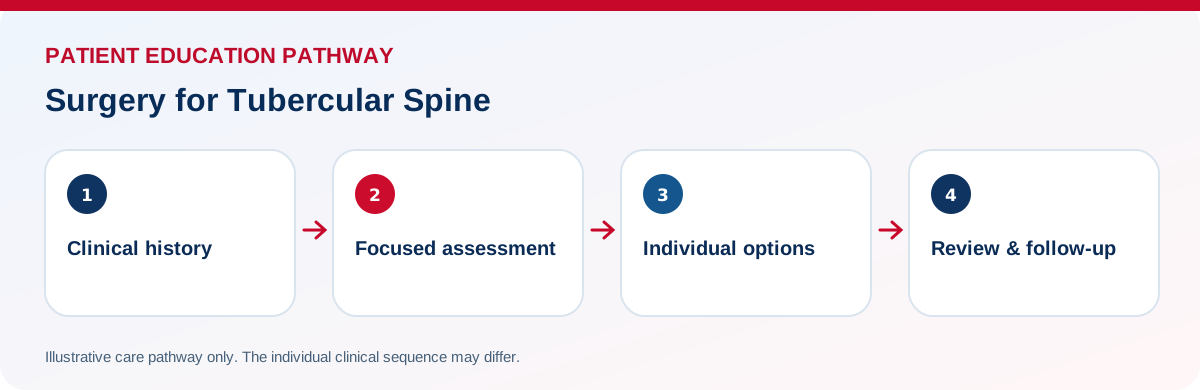
Discuss symptoms, imaging, treatment alternatives and expected follow-up.